











Original article | Odaily Planet Daily (@OdailyChina)
Author|Golem@web3_golem)
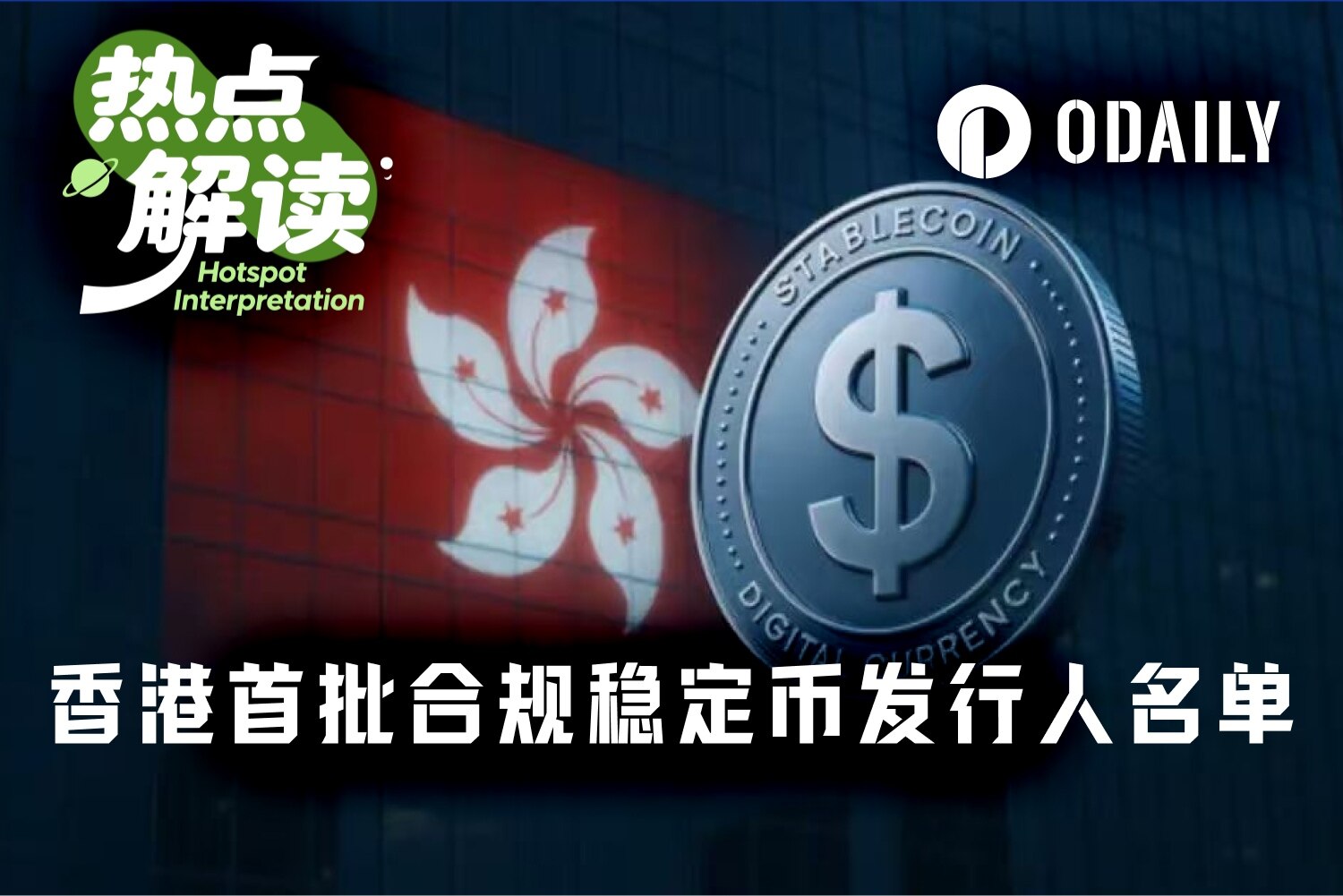
Hong Kong has finally issued its first batch of stablecoin licenses.
At 5 pm on April 10, the Hong Kong Monetary AuthorityAnnounceThe first batch of stablecoin issuer licenses were granted to two institutions, namely...HSBC and Idol Point Financial Technology Co., Ltd.(A joint venture established by Standard Chartered Bank, Hong Kong Telecom and Anni Group), and it also stated that, according to the two institutions' current business plans, Hong Kong's regulated stablecoins will be launched successively from the middle to the second half of this year.
Eddie Yue, Chief Executive of the Hong Kong Monetary Authority (HKMA), said: “The granting of stablecoin issuer licenses is a significant milestone in the development of digital assets in Hong Kong. The regulatory system provides an orderly operating environment, allowing stablecoin issuers to properly protect user rights and manage related risks while applying innovative technologies, thus enabling the healthy, responsible, and sustainable development of Hong Kong’s stablecoin ecosystem. I look forward to issuers commencing their business as planned, actively exploring development opportunities while managing risks effectively, promoting the application of compliant stablecoins, addressing pain points in financial and economic activities, creating value for citizens and businesses, and promoting the healthy development of Hong Kong’s digital assets.”
According to previous reports, the Hong Kong Monetary Authority (HKMA) completed the final review of the first batch of applications in mid-March 2026. The HKMA received a total of 36 applications, and plans to issue 2 to 3 licenses in the first batch, with strict regulatory standards.OSL Group (863.HK) was previously considered a strong contender for a license, but unfortunately failed to win one today.
OSL Group stated today that it welcomes the Hong Kong Monetary Authority's issuance of the first batch of stablecoin issuer licenses under the Stablecoin Ordinance, and will continue to work closely with all stakeholders to actively participate in the development of the compliant stablecoin ecosystem in Hong Kong.
After two years, Hong Kong's compliant stablecoin has finally been launched.
The issuance of the first batch of stablecoin licenses in Hong Kong marks a new stage in the implementation of Hong Kong's stablecoin regulatory system. However, the market waited a full two years for these stablecoin compliance licenses to be officially issued, making this an achievement resulting from a delicate balance between financial innovation and regulatory security in Hong Kong.
Rewinding to two years ago, in March 2024, the Hong Kong Monetary Authority (HKMA) officially launched the "Stablecoin Issuer Sandbox Arrangement." This marked an important starting point for the practical implementation of stablecoin regulation in Hong Kong. The market witnessed the open attitude of Hong Kong regulators towards crypto finance, which attracted many institutions, including traditional financial giants and native Web3 companies, to apply to participate in the sandbox experiment.
In July of the same year, after a four-month review process, the HKMA announced the sandbox participants, including five institutions: JD CoinChain Technology (Hong Kong) Limited, Yuanbi Innovation Technology Co., Ltd., Standard Chartered Bank (Hong Kong) Limited, Anni Group Limited, and Hong Kong Telecom (HKT) Limited. Market expectations were officially ignited, as this indicated that Hong Kong's stablecoin regulation had entered a phase of specific institutional testing and regulatory refinement, and that Hong Kong was not far from incorporating stablecoins into a formal regulatory framework.
Hong Kong's stablecoin sandbox experiment lasted for a year. On August 1, 2025, the Hong Kong Stablecoin Ordinance came into effect, and the regulatory system for stablecoin issuers was officially implemented. This is a key milestone in the development of virtual assets in Hong Kong, marking the beginning of a licensed regulatory era for stablecoins in Hong Kong.
The second half of 2025 coincides with the height of the cross-sector narratives between crypto and traditional finance, such as RWA, stock tokenization, and crypto treasuries of listed companies. Following the enactment of the Hong Kong Stablecoin Ordinance, the market anticipates a golden age for Hong Kong's crypto finance. Therefore, when the HKMA opened its first round of stablecoin issuer license applications, statistics show that over 70 companies, including financial institutions, Web2 internet companies, and blockchain enterprises, expressed interest in applying for Hong Kong stablecoin licenses.
However, just as the situation was heating up, Hong Kong's stablecoin and RWA businesses faced regulatory cooling. In September 2025, it was reported that companies in Hong Kong engaged in stablecoin and RWA businesses were "warned" and required to maintain a low profile in their statements and discussions related to stablecoins and RWA. At the same time, the participation of Chinese-funded enterprises in Hong Kong's stablecoin business was strictly controlled. According to a Caixin report at the time, because Hong Kong's stablecoin business was still in its early stages, excessive participation by Chinese-funded institutions could pose risks, thus requiring the prior isolation of these risks.
This unexpected turn of events directly led to a sharp decline in the number of companies applying for Hong Kong stablecoin licenses. Not only did Chinese banks and state-owned enterprises withdraw, but Web2 internet companies also suspended their stablecoin issuance plans. In October 2025, according to informed sources…discloseAlibaba's Ant Group and JD.com have both suspended their plans to issue stablecoins in Hong Kong. Ultimately, the HKMA received only 36 applications for stablecoin licenses, and the market subsequently cooled down.
In early February this year, Eddie Yue, Chief Executive of the Hong Kong Monetary Authority, stated that the goal was to issue the first batch of stablecoin issuer licenses in Hong Kong in March. He also emphasized:"The number of licenses issued in the first batch will definitely be small, with a focus on stability."
Rewinding to the present, more than eight months have passed since the Hong Kong Stablecoin Ordinance came into effect, and the first batch of stablecoin licenses in Hong Kong were finally issued today. In the past two years, the market has urged, capital has been hot, concepts have been hyped, and regulations have been tightened. After many hardships, the path for compliant stablecoins in Hong Kong has finally been completed from "sandbox testing - legislation implementation - application review - formal licensing".
The era of stablecoins is coming to Hong Kong.
Undoubtedly, the issuance of Hong Kong's first batch of stablecoin licenses is another important milestone in its journey towards becoming an "international digital asset financial center".
For Hong Kong, this licensing signifies that stablecoin regulation is no longer confined to the institutional level. As licensed institutions engage in actual stablecoin business, such as in cross-border payments, digital securities, and DeFi, Hong Kong's digital finance market will become more dynamic and gain greater influence in the future global digital finance system, seizing the strategic high ground of "digital seigniorage."
Looking at the market more specifically, the issuance of the first batch of licenses could revitalize Hong Kong's crypto market. Previously, when people thought of Hong Kong stablecoins, they associated them with forums, summits, and expectations—it was certainly lively, but always fell short of real business. Now, the first batch of licensed companies can finally legally conduct stablecoin business, exploring the potential of the Hong Kong market in areas such as cross-border payments, institutional settlements, and on-chain finance.
Of course, the issuance of the first batch of licenses does not mean that the market landscape is set. Although the early adopters will have a leading advantage, it is not to the point that later entrants cannot surpass them. Only when the second and third batches of licenses are issued in the future will the market officially enter a stage of competition based on scenarios, execution capabilities, and products and services.
Therefore, the first batch of licenses is not the climax of the Hong Kong stablecoin story; on the contrary, it is just the beginning, and the great era of Hong Kong stablecoins is about to arrive.