



web3: Foreign media: Trump refuses to install AI fences, increasing pressure on crypto security
CoinPedia
09-15 04:49
Ai Focus
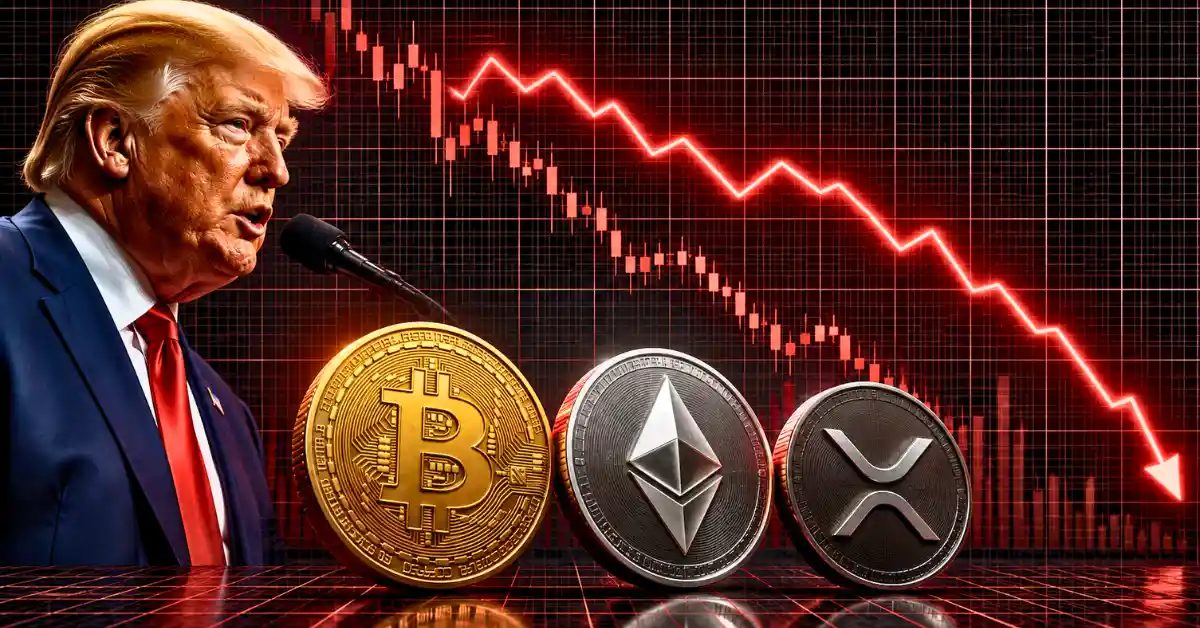
Foreign media reports that Trump's refusal to strengthen the regulation of AI may expose cryptocurrencies and DeFi to a higher risk of phishing, deep fakes, and vulnerability exploitation.
Helpful
No.Help

Foreign media reports that Trump's refusal to push for stricter AI regulations is bringing a set of more realistic problems to the crypto industry. The article argues that AI is not only a development tool but could also become an attack tool. In the context where DeFi and the security of on-chain protocols rely heavily on code, relaxed regulation may expose such risks more quickly.

Trump expresses opposition to adding new barriers

It is reported that Trump stated that the United States needs to maintain its competitiveness and should not slow down its development due to additional restrictions. He said that what the industry needs is a "strong and smart president," and indicated that his administration will take proactive measures to prevent AI from being used for "bad purposes."

The article mentions that Vice President JD Vance also supports this stance, believing that some regulatory calls are more like a "Trojan horse" aimed at restricting industry development. It is also mentioned in the article that China has not accepted the idea of slowing down the development of AI.

AI has entered the field of encrypted security attack and defense.

The article argues that the impact of AI on the crypto industry is twofold. On one hand, it can help developers identify code defects more quickly; on the other hand, it may also allow attackers to scale their attacks at a lower cost.

The article cites an example where Zcash had a ethical hacker use AI to discover a forged vulnerability in the code. If the discoverer were not a white-hat developer, the consequences could have been completely different. The article also mentions that similar tools might even be used by autonomous proxy programs for exploitations of vulnerabilities.

In addition to code security, AI is also considered to exacerbate social engineering attacks. The article mentions that realistic phishing content, deeply forged videos, and voices can all be used to impersonate project representatives or senior executives of trading platforms. Related cases of Patrick Hillman, a former executive of Binance, are cited as examples of such risks.

The article claims that risk narratives are also exaggerated.

However, this comment does not entirely side with the view that “AI has gotten out of control.” The article cites the opinion of investor Michael Burry stating that the narrative surrounding the AI disaster has been exaggerated excessively, and that behind this are both marketing factors and a reflection of the slowdown in industry growth and intensified competition.

The core conclusion of the article is that if AI regulation continues to be lax, the crypto industry will not only reap efficiency benefits but also have to bear higher security costs. For DeFi, wallets, trading platforms, and on-chain projects, future pressures may come more from the upgrading of attack methods, rather than just traditional code audit issues.

Tip
$0
Like
1
Save
1
Views 653
HKWDB reminds readers to view blockchain rationally, stay aware of risks, and beware of virtual token issuance and speculation. All content on this site represents market information or related viewpoints only and does not constitute any form of investment advice. If you find sensitive content, please click“Report”,and we will handle it promptly。
Submit
Comment 0
Hot
Latest
No comments yet. Be the first!
Related
CFTC Chairman Says Binance Hacker Attack Indicates That Offshore Exchanges Need US Regulation
Michael Selliger, chairman of the U.S. Commodity Futures Trading Commission (CFTC), stated that the $6.4 billion hack incident at Binance “precisely demonstrates” the necessity of the crypto market regulations proposed by the agency this month. He described the attack as being more likely caused by a vulnerability introduced through a laptop rather than a flaw in the blockchain itself; however, Binance later indicated that the investigation had uncovered “more entry points” for the attack.
Decrypt
·2026-10-31 23:10:23
11
Intel experiences its largest single-day decline in over forty years; the NASDAQ falls nearly 3%, gold drops to a one-year low, and crude oil continues to rise for four months in a row.
Amazon and Intel's financial reports disappointed the market. Investors are increasingly skeptical about the returns on the huge AI expenditures of these tech giants. All three major U.S. stock indices closed lower, with tech stocks leading the decline, while energy and essential consumer goods sectors performed strongly against the trend. Driven by the Middle East situation, crude oil prices rose to a six-month high; U.S. Treasury yields fell, gold dropped to a one-year low, and Bitcoin lost its support below $77,000.
Wallstreetcn
·2026-10-31 22:30:06
31
I went on vacation with two iPhone, and Duo convinced me to do so.
The author tried out Apple's new iPhone Duo during a five-day vacation. Initially, due to application issues, Touch ID, and the camera, among other factors, they considered returning to their original iPhone. However, by the end of the trip, they changed their mind, finding that although this foldable phone has its shortcomings, it is indeed fascinating.
TechCrunch
·2026-10-31 22:21:57
34
Neuberger Next Generation Connectivity Fund Announces an Increase in Allocation Rate and Reveals the Monthly Allocation for Next Month
Neuberger Next Generation Connectivity Fund Inc. (NYSE : NBXG) announces a distribution of $0.132 per common share, to be paid on November 30, 2026, with the record date and ex-dividend date both set for November 16, 2026. The fund states that under its actively managed distribution policy, future monthly distributions are expected to be $0.132 per share, but whether this can be maintained depends on market conditions, investment returns, capital gains, and expenses, among other factors.
PR Newswire
·2026-10-31 22:21:54
34
After Binance was attacked by hackers, how should investors protect the security of their crypto assets?
On October 29, Binance was attacked by hackers, with an estimated loss of $6.3 billion, which has drawn external attention to the recovery of stolen funds, the exchange's compensation commitments, and the lack of a similar deposit insurance protection mechanism for crypto assets like FDIC. Experts say that whether an exchange compensates usually depends on its own willingness and financial capability, and while self-hosting by individuals can reduce some platform risks, it also brings new security hazards.
CNBC
·2026-10-31 22:11:08
37
View More