



How Wrapped Bitcoin connects Bitcoin with Ethereum DeFi
Cryptonews
06-27 21:20
Ai Focus
WBTC allows Bitcoin's value to enter Ethereum DeFi, but holders must bear additional custody and contract risks.
Helpful
No.Help

Bitcoin has long been the largest value pool in the crypto market, but native BTC cannot directly enter the Ethereum smart contract system. To address this limitation, Wrapped Bitcoin (WBTC) was designed as an ERC-20 token pegged to the price of Bitcoin, allowing holders to bring their value into Ethereum DeFi without selling their BTC exposure.

How WBTC Works

WBTC's basic structure is 1:1 reserve backing. For every WBTC issued, there is one real Bitcoin held in custody by a custodian. The article states that the goal of this model is to bring Bitcoin liquidity to Ethereum, enabling it to be used for scenarios such as lending, staking, trading, and liquidity pools.

The reason for needing such encapsulated assets lies in the different designs of the two chains. The Bitcoin network itself is not well-suited for running complex smart contracts, while most DeFi applications on Ethereum rely on the ERC-20 standard. WBTC solves the compatibility issue between the two by mapping BTC to Ethereum tokens.

Casting and Destruction Mechanism

The article explains that WBTC mainly operates through a "minting-burning" model, involving three types of participants: custodians, merchants, and users.

  • The custodian is responsible for safeguarding the actual Bitcoin reserves.
  • Merchants are responsible for user verification, distribution, and redemption processes.
  • Users complete the conversion between BTC and WBTC.

When a user wants to obtain WBTC, they typically first submit an application to a merchant. After the merchant completes identity and compliance checks, they entrust the corresponding amount of Bitcoin to a custodian, who then mints an equivalent amount of WBTC on Ethereum. For reverse redemption, the user submits WBTC, the tokens are destroyed, and the custodian releases the corresponding BTC.

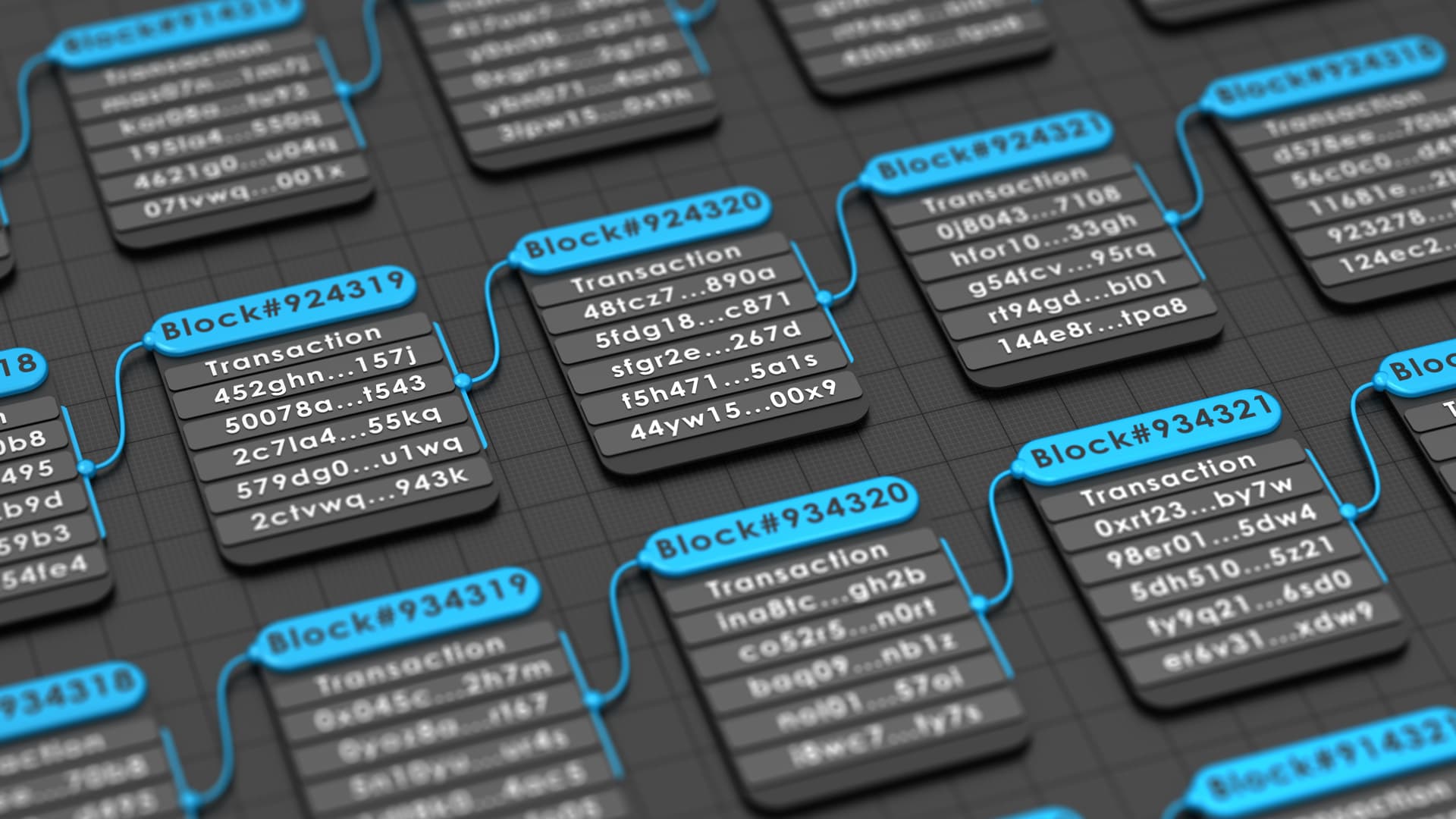
The article mentions that these minting and burning records can be viewed on the blockchain, and the reserve status is also subject to proof-of-reserve checks to verify whether the circulating WBTC is backed by a corresponding Bitcoin.

What can be done, and what risks are involved?

At the usage level, WBTC allows Bitcoin price exposure to go directly into Ethereum DeFi. Holders can use it for lending, staking, exchanging, or providing liquidity without having to sell BTC first and then exchange it for other assets.

However, the article emphasizes that holding WBTC is not the same as holding native Bitcoin. The biggest difference lies in the fact that WBTC adds additional trust elements and technical risks, including:

  • Custody risk, meaning the underlying BTC is held in custody by a third party.
  • Smart contract risks refer to the potential vulnerabilities in the contracts themselves.
  • The bridging or encapsulation risk means that the cross-chain mapping structure may fail.

This means that while WBTC improves the usability of BTC in DeFi, it comes at the cost of introducing more intermediaries. The article also mentions other alternatives in the market, such as Coinbase's cbBTC and tBTC, which emphasizes a more decentralized custody structure. The main difference between these products lies in the type of custody and trust assumptions users are willing to accept.

Tip
$0
Like
1
Save
2
Views 646
HKWDB reminds readers to view blockchain rationally, stay aware of risks, and beware of virtual token issuance and speculation. All content on this site represents market information or related viewpoints only and does not constitute any form of investment advice. If you find sensitive content, please click“Report”,and we will handle it promptly。
Submit
Comment 0
Hot
Latest
No comments yet. Be the first!
Related
CFTC Chairman Says Binance Hacker Attack Indicates That Offshore Exchanges Need US Regulation
Michael Selliger, chairman of the U.S. Commodity Futures Trading Commission (CFTC), stated that the $6.4 billion hack incident at Binance “precisely demonstrates” the necessity of the crypto market regulations proposed by the agency this month. He described the attack as being more likely caused by a vulnerability introduced through a laptop rather than a flaw in the blockchain itself; however, Binance later indicated that the investigation had uncovered “more entry points” for the attack.
Decrypt
·2026-10-31 23:10:23
9
Intel experiences its largest single-day decline in over forty years; the NASDAQ falls nearly 3%, gold drops to a one-year low, and crude oil continues to rise for four months in a row.
Amazon and Intel's financial reports disappointed the market. Investors are increasingly skeptical about the returns on the huge AI expenditures of these tech giants. All three major U.S. stock indices closed lower, with tech stocks leading the decline, while energy and essential consumer goods sectors performed strongly against the trend. Driven by the Middle East situation, crude oil prices rose to a six-month high; U.S. Treasury yields fell, gold dropped to a one-year low, and Bitcoin lost its support below $77,000.
Wallstreetcn
·2026-10-31 22:30:06
25
I went on vacation with two iPhone, and Duo convinced me to do so.
The author tried out Apple's new iPhone Duo during a five-day vacation. Initially, due to application issues, Touch ID, and the camera, among other factors, they considered returning to their original iPhone. However, by the end of the trip, they changed their mind, finding that although this foldable phone has its shortcomings, it is indeed fascinating.
TechCrunch
·2026-10-31 22:21:57
28
Neuberger Next Generation Connectivity Fund Announces an Increase in Allocation Rate and Reveals the Monthly Allocation for Next Month
Neuberger Next Generation Connectivity Fund Inc. (NYSE : NBXG) announces a distribution of $0.132 per common share, to be paid on November 30, 2026, with the record date and ex-dividend date both set for November 16, 2026. The fund states that under its actively managed distribution policy, future monthly distributions are expected to be $0.132 per share, but whether this can be maintained depends on market conditions, investment returns, capital gains, and expenses, among other factors.
PR Newswire
·2026-10-31 22:21:54
28
After Binance was attacked by hackers, how should investors protect the security of their crypto assets?
On October 29, Binance was attacked by hackers, with an estimated loss of $6.3 billion, which has drawn external attention to the recovery of stolen funds, the exchange's compensation commitments, and the lack of a similar deposit insurance protection mechanism for crypto assets like FDIC. Experts say that whether an exchange compensates usually depends on its own willingness and financial capability, and while self-hosting by individuals can reduce some platform risks, it also brings new security hazards.
CNBC
·2026-10-31 22:11:08
33
View More