


The "crypto mom" of the U.S. Securities and Exchange Commission (SEC) bids farewell to the regulator and will join law school.
Cointelegraph
05-21 10:00

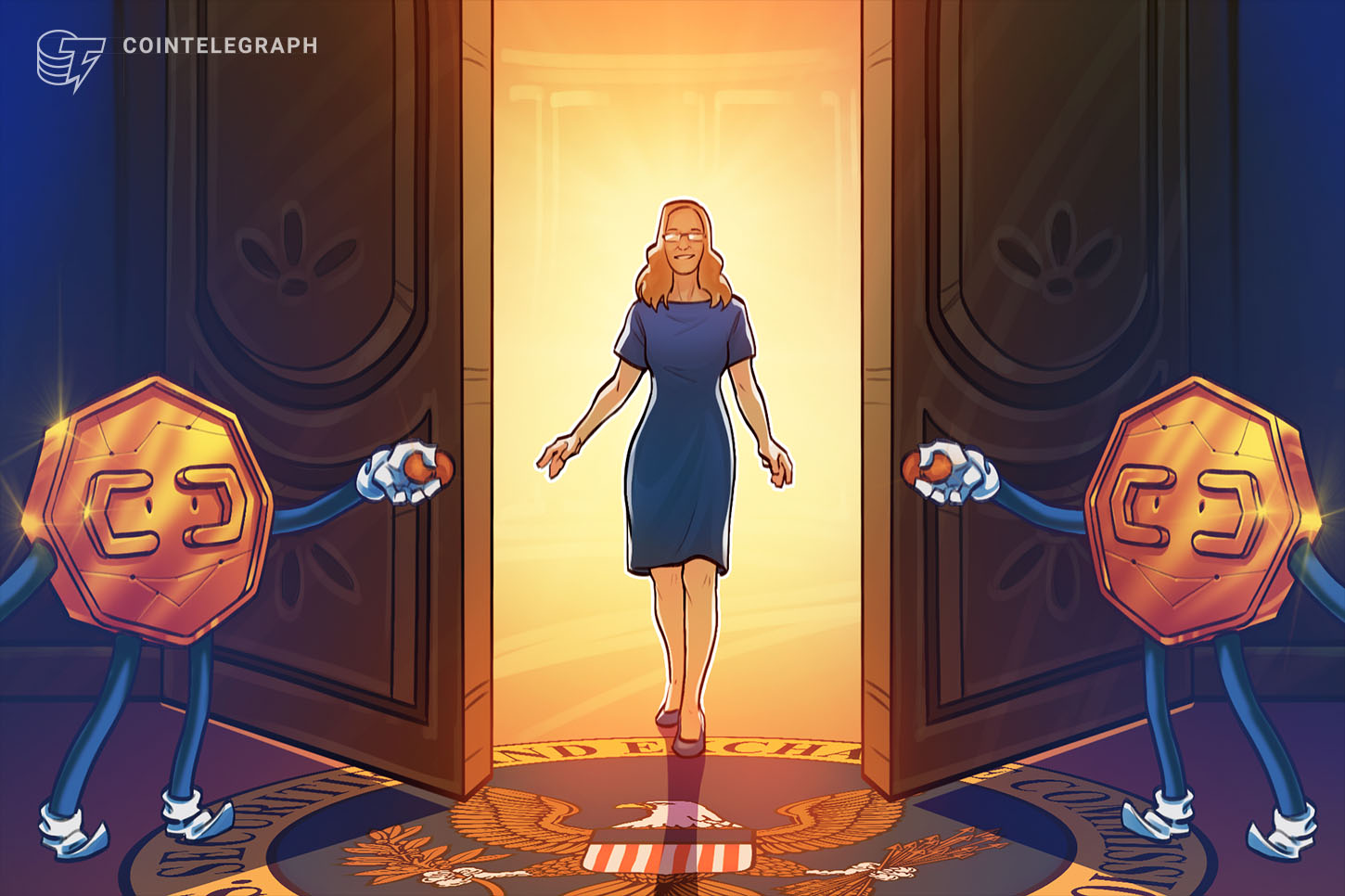
Hester Peirce, a two-term commissioner of the U.S. Securities and Exchange Commission (SEC), head of the Institutional Crypto Task Force, and known in the industry as "Crypto Mom," will join Regent University School of Law as a faculty member.

According to a Regent University announcement on Tuesday, the law school stated that Peirce will join as an associate professor in November. Her term at the SEC officially expires in June 2025, but according to the agency's rules, commissioners "may continue to serve for approximately 18 months beyond their term if they are not replaced."

She joined the SEC in January 2018 after being nominated by then-President Trump and confirmed by the Senate in December 2017. She was confirmed for a second term in 2020. In 2015, then-President Obama initially nominated her for a Republican seat on the SEC, but the Senate did not act on her nomination.

According to the university, Peirce is expected to help the law school strengthen its academic focus in several areas, including federal litigation, securities regulation, and digital assets.

Source: Hester Peirce

Peirce's seat may not be filled immediately. Former Democratic Commissioner Caroline Crenshaw left in January, 18 months after her term ended, and President Trump has yet to nominate anyone to fill the vacancy. Peirce's departure will leave the SEC with only two Republican commissioners: Mark Uyeda and Chairman Paul Atkins.

Since Trump took office in January 2025, the SEC has radically changed its policy on crypto regulation and enforcement. The agency has withdrawn numerous enforcement actions and investigations against crypto companies, including cases involving Trump and his family.

The CFTC also faces a large number of vacancies.

The SEC and the Commodity Futures Trading Commission (CFTC) are the two most important federal financial regulators overseeing the crypto industry. Under the leadership of Trump appointees Atkins and CFTC Chairman Michael Seliger, the two agencies have stated they will coordinate their efforts to end what they call a “regulatory turf war.”

Source: Paul Atkins

However, as the digital asset market structure bill progresses through Congress, more and more lawmakers are calling on Trump to nominate a bipartisan commission to fully fill the positions in these agencies.

Selig remains the sole incumbent commissioner and chairman of the CFTC, which should have five members, while Peirce's impending departure will leave the SEC with only two commissioners. As of Wednesday, Trump had not yet announced any appointments for commissioners from either agency.

The CLARITY Act, a market structure bill, is widely believed to transfer many of the responsibilities and powers of regulating the crypto market from the SEC to the CFTC.

Tip
$0
Like
0
Save
0
Views 580
HKWDB reminds readers to view blockchain rationally, stay aware of risks, and beware of virtual token issuance and speculation. All content on this site represents market information or related viewpoints only and does not constitute any form of investment advice. If you find sensitive content, please click“Report”,and we will handle it promptly。
Submit
Comment 0
Hot
Latest
No comments yet. Be the first!
Related
CFTC Chairman Says Binance Hacker Attack Indicates That Offshore Exchanges Need US Regulation
Michael Selliger, chairman of the U.S. Commodity Futures Trading Commission (CFTC), stated that the $6.4 billion hack incident at Binance “precisely demonstrates” the necessity of the crypto market regulations proposed by the agency this month. He described the attack as being more likely caused by a vulnerability introduced through a laptop rather than a flaw in the blockchain itself; however, Binance later indicated that the investigation had uncovered “more entry points” for the attack.
Decrypt
·2026-10-31 23:10:23
11
Intel experiences its largest single-day decline in over forty years; the NASDAQ falls nearly 3%, gold drops to a one-year low, and crude oil continues to rise for four months in a row.
Amazon and Intel's financial reports disappointed the market. Investors are increasingly skeptical about the returns on the huge AI expenditures of these tech giants. All three major U.S. stock indices closed lower, with tech stocks leading the decline, while energy and essential consumer goods sectors performed strongly against the trend. Driven by the Middle East situation, crude oil prices rose to a six-month high; U.S. Treasury yields fell, gold dropped to a one-year low, and Bitcoin lost its support below $77,000.
Wallstreetcn
·2026-10-31 22:30:06
31
I went on vacation with two iPhone, and Duo convinced me to do so.
The author tried out Apple's new iPhone Duo during a five-day vacation. Initially, due to application issues, Touch ID, and the camera, among other factors, they considered returning to their original iPhone. However, by the end of the trip, they changed their mind, finding that although this foldable phone has its shortcomings, it is indeed fascinating.
TechCrunch
·2026-10-31 22:21:57
34
Neuberger Next Generation Connectivity Fund Announces an Increase in Allocation Rate and Reveals the Monthly Allocation for Next Month
Neuberger Next Generation Connectivity Fund Inc. (NYSE : NBXG) announces a distribution of $0.132 per common share, to be paid on November 30, 2026, with the record date and ex-dividend date both set for November 16, 2026. The fund states that under its actively managed distribution policy, future monthly distributions are expected to be $0.132 per share, but whether this can be maintained depends on market conditions, investment returns, capital gains, and expenses, among other factors.
PR Newswire
·2026-10-31 22:21:54
34
After Binance was attacked by hackers, how should investors protect the security of their crypto assets?
On October 29, Binance was attacked by hackers, with an estimated loss of $6.3 billion, which has drawn external attention to the recovery of stolen funds, the exchange's compensation commitments, and the lack of a similar deposit insurance protection mechanism for crypto assets like FDIC. Experts say that whether an exchange compensates usually depends on its own willingness and financial capability, and while self-hosting by individuals can reduce some platform risks, it also brings new security hazards.
CNBC
·2026-10-31 22:11:08
37
View More