














Key Points
- Despite the decline in indices, most stocks in the S&P 500 still recorded gains.
- Equities with equal weights outperform traditional benchmarks
- Concerns about expenditures related to AI have triggered a large-scale market rotation.
Wall Street once again faced painful sell-offs in tech stocks at the end of October, but behind these headlines, some unexpected changes are taking place in the market. Among the largest listed companies in the United States, most are actually experiencing value appreciation.
The S&P 500 index fell 0.9% in October, despite 72% of its constituent stocks closing higher during that month. Meanwhile, the Invesco S &P 500 Equal Weight ETF rose by about 5%.
AI Stocks drag down the S&P 500, while most companies see gains
The selling pressure in October was mainly concentrated among companies that have a large exposure to artificial intelligence infrastructure and technology spending.
Alphabet fell 18.7% for the month, Meta fell 15.2%, Micron Technology fell 16.9%, and NVIDIA fell 10.4%.
Investors are becoming increasingly concerned that tech companies are investing tens of billions of dollars in AI chips, data centers, and cloud infrastructure.
After Intel's stock tumbled nearly 29% in a single day due to earnings guidance that fell short of expectations, such concerns were further exacerbated. Coinpaper's analysis of Intel discusses manufacturing issues and weak demand in other areas, and how these may offset the strong growth associated with AI.
Even though NVIDIA's quarterly revenue has doubled year-on-year, Wall Street is still concerned about the spending capacity of its customers, which puts pressure on the company as well.
As emphasized in the report on NVIDIA by Coinpaper, strong demand for AI chips does not necessarily protect a stock from a decline in valuation.
However, as technology stocks decline, investors are turning to other sectors of the economy.
According to the data from Nasdaq Dorsey Wright, the essential consumer goods sector rose by about 11% in October, achieving the best single-month performance on record. Public utilities and healthcare also attracted capital inflows.
As a result, the market is simultaneously witnessing two completely different narratives.
Why is the S&P 500 still declining when 72% of stocks are rising?
The answer lies in the methodology of compiling the S&P 500.
Unlike indices that give equal weight to each company based on their influence, the standard version of the S&P 500 weights companies according to their market capitalization.
Therefore, a company with a market value of $5 trillion has a much greater impact on an index than a company with a market value of $20 billion.
By October, the top ten constituent stocks of this index accounted for approximately 40% of its total market value.
This level of concentration means that a significant decline in a few super-large market-cap tech stocks is enough to offset the gains of hundreds of smaller companies.
The operation of the equal-weight index is different; during regular rebalancing, it roughly assigns the same weight to each constituent stock.
Therefore, an increase in the performance of more companies will have a greater impact on their overall performance.
The comparison in October makes this point particularly clear.
The traditional S&P 500 index fell by 0.9%, while the equal-weight version rose by about 5%, despite both tracking essentially the same group of companies.
What does the October market rotation mean for investors?
This differentiation challenges the assumption that a decline in the 'Headline Index' means that most stocks are weakening.
It also indicates that holding broad-based index funds does not equate to eliminating the risk of concentration.
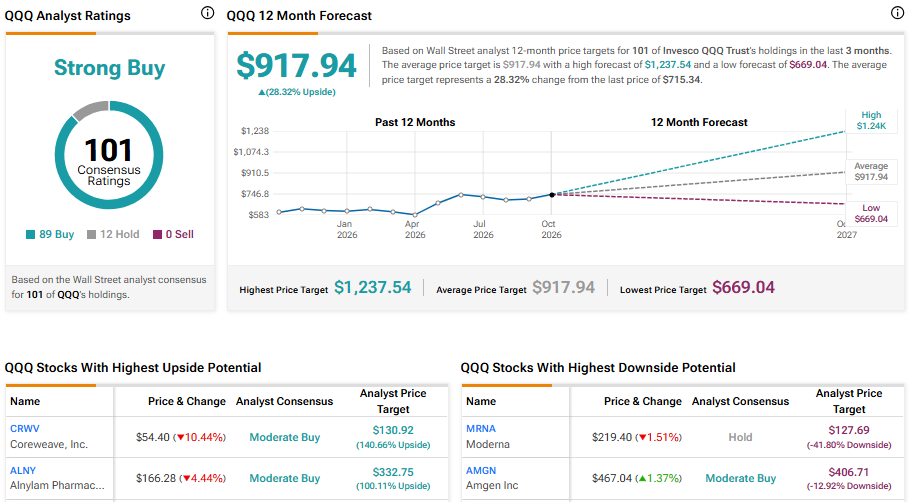
Investors holding positions in the S&P 500, NASDAQ 100, and technology-themed ETF may, without realizing it, have a considerable exposure to some of the same companies, even though these investments appear to be diversified.
The recent selling pressure on NASDAQ indicates how quickly such concentration can magnify losses when investors turn against AI expenditures.
At the same time, Apple has once again become the most valuable company in the world, indicating that even within tech giants, investors have become more selective.